
How to Check Criminal History in La Paz County
No single public database contains every La Paz County criminal record. Begin with the type of event. A filed charge belongs in the Arizona Public Access Case Lookup and at the court that heard it. A sheriff incident or arrest report belongs with the Sheriff's Office records custodian. Current county custody calls for the detention line or VINE, while a state prison record belongs in the Arizona Department of Corrections, Rehabilitation & Reentry search. Arizona DPS supplies a subject-of-record review for someone checking their own central repository record.
Gather the full name, any known spelling variants, an approximate event date, the arresting agency, and a case or departmental report number when available. Those details help separate similar names and tell staff which system to check. Then follow a short route:
- Choose the record owner: court, sheriff or police, jail, DPS, corrections, or registry.
- Search the official public portal when one exists, using a case number before a name when possible.
- Compare the court, filing date, charge, and status rather than relying on a name alone.
- Ask the local counter for a missing document, certified copy, or agency report.
- Verify the final disposition with the court that decided the case.
Note: An arrest entry and a court disposition describe different points in the same process and may not use identical charge language.
La Paz County Records Start in Parker
La Paz County was formed in 1983, and its main criminal record counters are clustered in Parker. The county seat holds the Superior Court Clerk, Justice Court, Sheriff's Office records desk, Adult Detention Facility, probation office, and County Attorney. This concentration matters in a county covering more than 4,500 square miles. A reader in a river community or along Interstate 10 may start by phone or online, yet the original file often returns to a Parker office.
The official La Paz County site shows the county department structure and contact hub.

The county page helps identify the department before a requester sends a form or travels to a counter. That routing step is especially useful because court files, police narratives, probation records, and jail files are not interchangeable.
Superior Court Clerk
1316 Kofa Ave., Suite 607
Parker, AZ 85344
(928) 669-6131
Monday-Friday, 8:00 a.m.-5:00 p.m.
Sheriff Records
1109 W. Arizona Ave.
Parker, AZ 85344
(928) 669-6141
Monday-Friday, 8:00 a.m.-5:00 p.m.
Adult Detention
1111 Arizona Ave.
Parker, AZ 85344
(928) 669-5816
Call for current custody information.
Official Arizona Background Checks
The Arizona Department of Public Safety Criminal History Records section operates the Central State Repository. It does not offer private citizens a general public name-based repository search. A person reviewing their own Arizona record uses the DPS Record Review Packet or the Public Services Portal. DPS says a completed packet includes fingerprints and identifying forms, and it mails a response within 15 days after receiving the complete request.
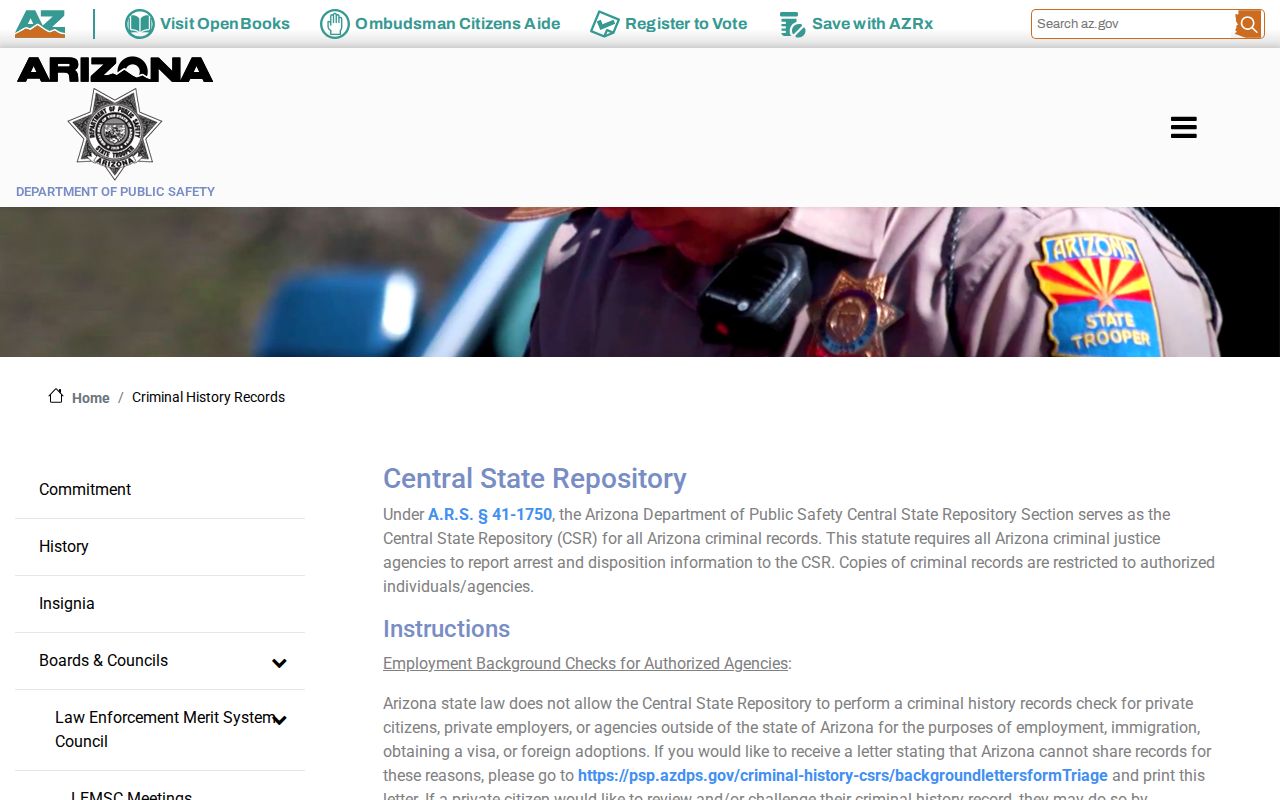
The DPS record-review page confirms that this process is for reviewing the subject's own Arizona repository record, not searching another person by name.
The DPS Public Services Portal overview separates criminal-history review or challenge from fingerprint clearance card services.
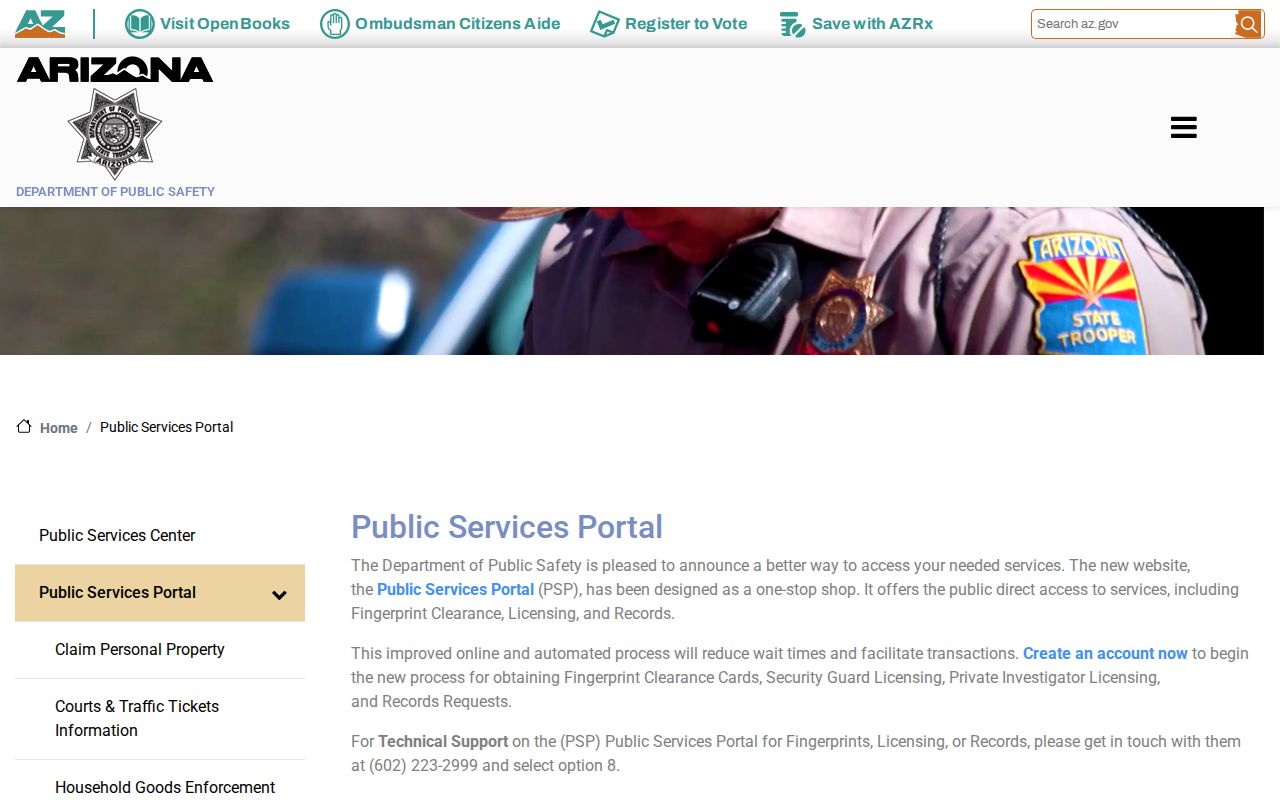
This separation prevents a common mistake: a court name search is not a state rap sheet, and a fingerprint clearance card is a distinct statutory process. Official licensing or volunteer roles that require fingerprints must use the authorized DPS channel for that purpose.
La Paz County Fingerprint Record Checks
The La Paz County Sheriff's Office offers local fingerprint service at its Parker office. Posted fingerprint hours are Monday through Friday, 8:30 to 11:00 a.m. and 2:00 to 4:00 p.m. Payment is by check or money order to the Sheriff's Office. The page also states that the office supplies fingerprint cards only for Livescan. For an electronic DPS fingerprint clearance card application, the applicant first receives a portal reference number and then follows Fieldprint instructions.
The DPS clearance card page explains the state application, vendor, and status steps.
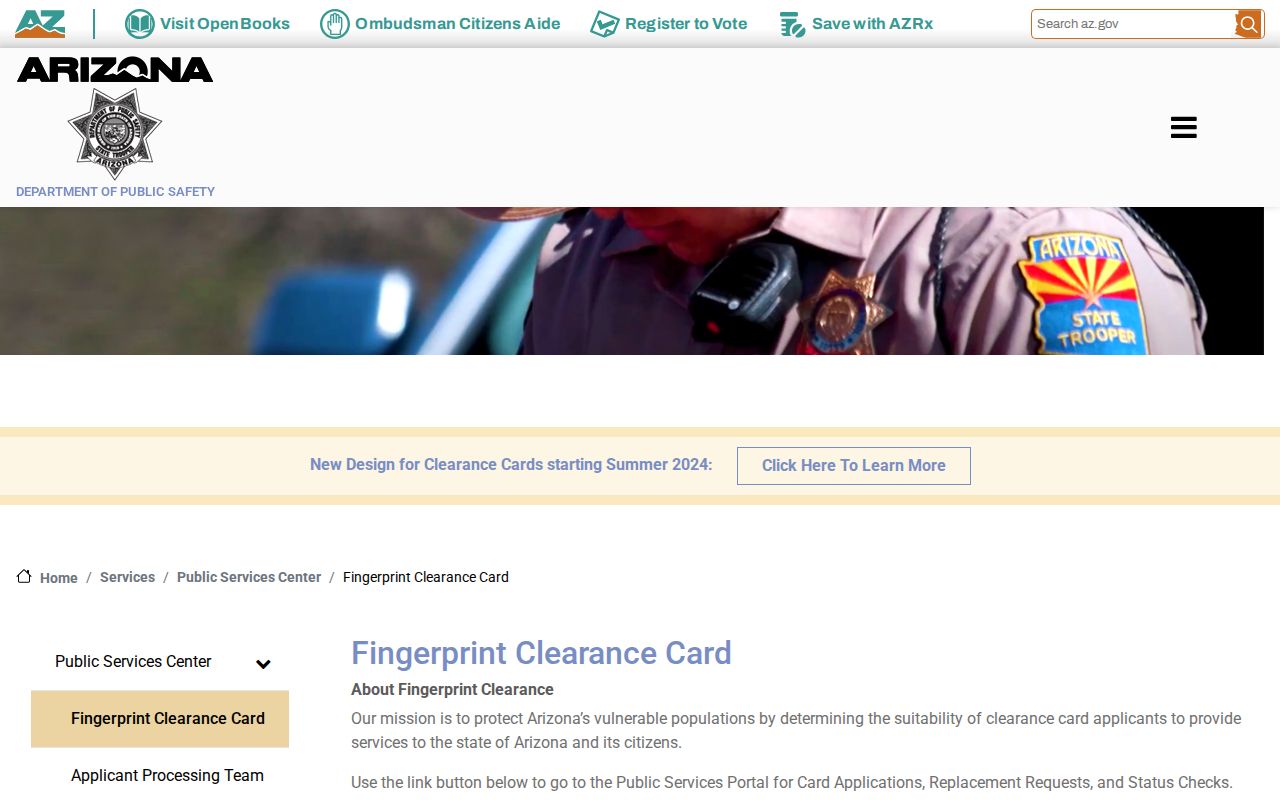
DPS lists a $67 application fee, or $65 for qualifying volunteers, plus any electronic fingerprint vendor fee. The sheriff's 2026 chart lists $29 for a first fingerprint card and $15 for each added card, with separate charges for some Livescan products.
| Local fingerprint item | Posted amount |
|---|---|
| First fingerprint card | $29 |
| Each additional card | $15 |
| Chain-of-custody process | $5 |
| Notary, if available | $10 |
| ID photo, if available | $15 |
Types of Criminal Records
La Paz County criminal history is made from separate files. An arresting officer creates an incident report. The jail creates a booking record if a person enters custody. A prosecutor may then file a complaint, information, or indictment, which starts a court case. DPS receives qualifying fingerprint and disposition data for the central repository. Each record answers a different question, so the best source depends on whether the reader needs allegations, present custody, filed charges, the outcome, or their own state record.
- Arrest and incident reports: request them from the sheriff, Parker Police, Quartzsite Police, or the agency that made the report.
- Booking records: check the Adult Detention Facility, sheriff records, or VINE for county custody.
- Court files: use the Arizona case lookup, eAccess, and the clerk for charges, hearings, and outcomes.
- Warrant entries: confirm them with the issuing court and law enforcement.
- State records: use DPS subject review or ADCRR custody tools for the record each agency maintains.
The county courts landing page points readers to the Justice Court and Superior Court Clerk.
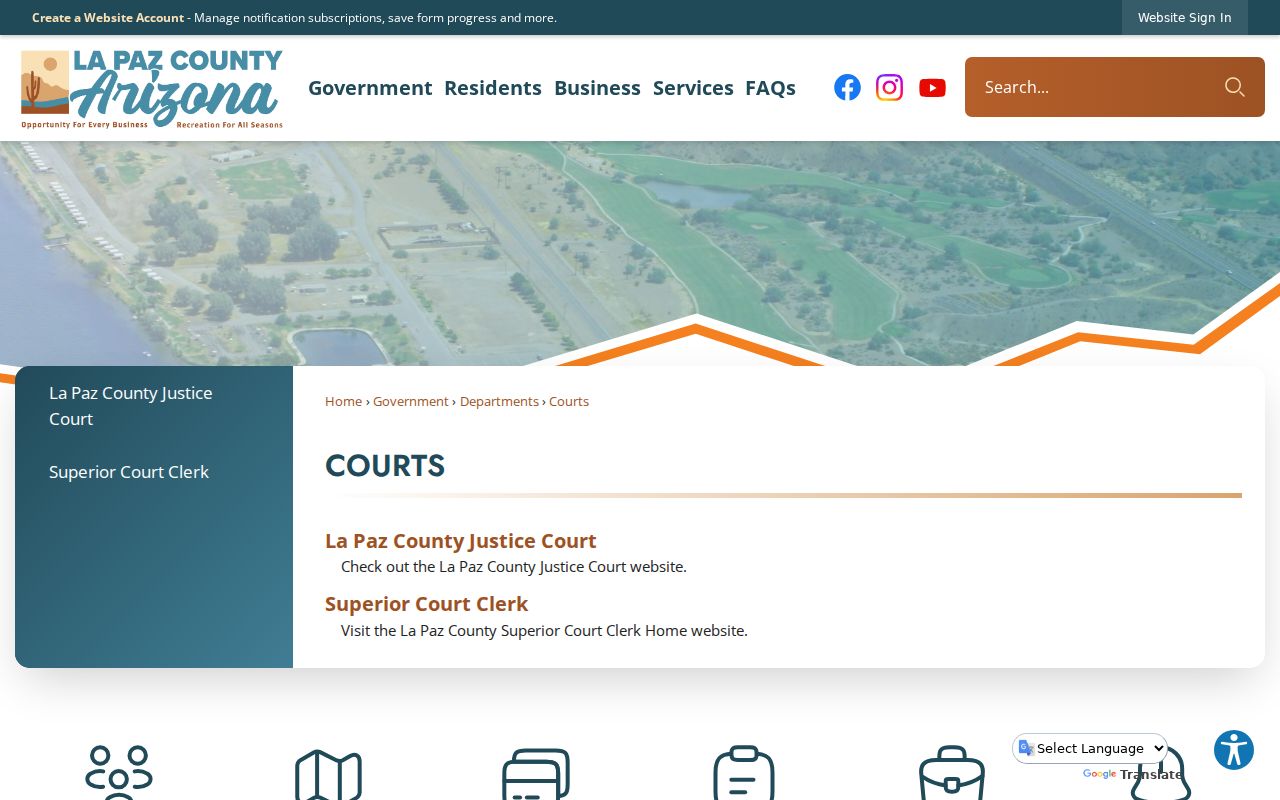
That court directory is a starting point after charges are filed, not a replacement for the arresting agency's report.
La Paz County Sheriff Record Requests
The Sheriff's Office records custodian is the most direct local channel for sheriff incident reports, accident reports, arrest narratives, 911 audio, and photo or video media. Jen Molina is listed as the Records Specialist at records@sheriff.lapaz.gov and (928) 669-6141 extension 4011. Requests can be submitted through the online Records Release Request Form, by a completed paper form dropped at the Parker office, in person, or through records phone, email, and fax contacts.
The county public-record request directory shows which county department receives each type of request.
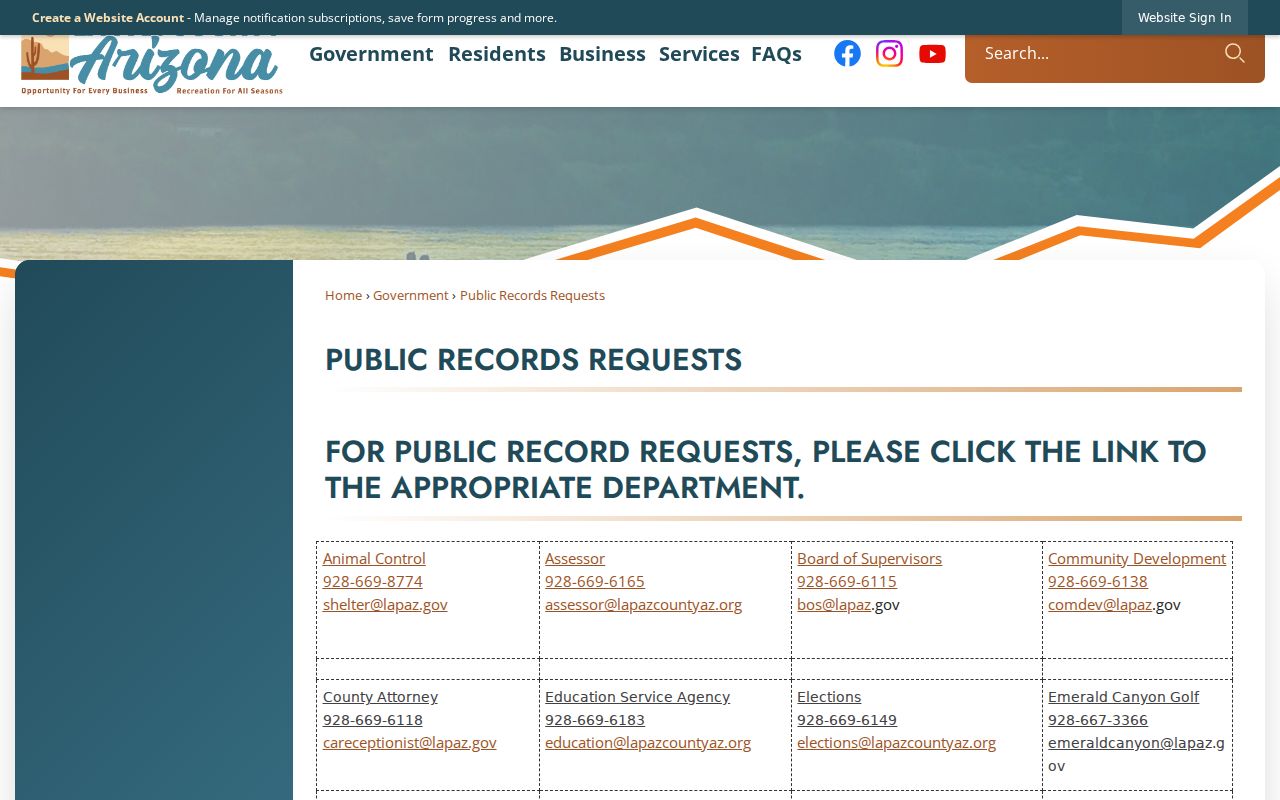
The sheriff form asks for a departmental report number, incident date, requester name and address, phone, return email, and commercial-use statement when applicable. Noncommercial police or accident reports are generally available after 14 days, though a complex or active investigation may take longer.
| Sheriff record item | Fee |
|---|---|
| First 10 report pages | $10 |
| Each later page | $0.50 |
| Photo CD or DVD | $20 |
| 911 tape | $20 |
| Qualifying victim incident report | No charge |
What a La Paz County Criminal Record Shows
A complete reading follows the same event across agencies. The arrest report may state probable cause and the charge named by the officer. A booking record adds intake, bond, and release details. The filed case may use a changed charge after prosecutor review. Its docket records hearings, motions, warrants, disposition, and sentence. A DPS repository entry ties a reportable arrest cycle to fingerprints and later reports, but private access is limited to authorized uses and a person's own review.
| Name & identifiers | Party name, aliases where recorded, date descriptors, fingerprints, and a process control number in repository records. |
|---|---|
| Arrest data | Report number, date, place, arresting agency, alleged offense, and officer narrative. |
| Court data | Case number, filed charges, judge, hearings, motions, and warrant or capias entries when public. |
| Disposition | Dismissal, acquittal, plea, conviction, or another outcome for each filed count. |
| Sentence | Custody, probation, fines, restitution, and other court orders. |
| Status | Release, current custody, supervision, sealing, or other access limits as recorded by the responsible agency. |
- Disposition
- The final result of a charge or case.
- Capias
- A court warrant, often issued after a failure to appear or comply.
- Set aside
- Arizona relief that marks a conviction set aside but does not erase the record.
- Sealing
- A court order under A.R.S. § 13-911 that limits general public access to eligible records.
When La Paz County Court Search Misses
The La Paz Superior Court Clerk warns that some cases or documents may not appear through public access. A missing result does not prove that no record exists. The matter may belong to Justice Court or a municipal court, the document may require eAccess, the filing may be too new, or a law or court rule may restrict public display. Sealed cases, juvenile matters, victim information, and protected addresses are common limits.
When a case summary is thin, call the clerk with the exact case number, party name, and approximate filing year. Ask whether the file is held by Superior Court and whether the desired document is public, remote, counter-only, or available as a certified copy. A court payment page is also not a full case search. Quartzsite's nCourt channel, for example, handles payments while the municipal court remains the source for its file.
The La Paz Superior Court Clerk documents its public access warning and eAccess route. Confirming the source prevents a false negative from becoming a mistaken conclusion.
Public Access Laws
Arizona law favors access to many public agency records, but it does not turn every criminal-history file into an open name search. Court records follow Arizona Supreme Court Rule 123. Sheriff and county requests generally use Title 39. Central repository dissemination follows a separate DPS statute. The office holding the original record applies redactions and restrictions before release.
Key statutes and rules:
A.R.S. § 39-121 opens public records for inspection during office hours unless another law limits access.
A.R.S. § 39-121.01 governs requests for inspection and copies and permits advance copying or postage charges.
A.R.S. § 39-121.03 requires a commercial-purpose statement and allows related charges.
A.R.S. § 41-1750 creates the DPS repository and controls criminal-history dissemination.
Arizona Supreme Court Rule 123 sets access rules for Arizona judicial records.
Active investigations, protected victim or witness data, juvenile information, and sealed records may be withheld or redacted. The request should be narrow enough for the custodian to identify the file and should name the desired format.
La Paz County Jail and Warrant Records
The La Paz County Sheriff AZ app displays quick links labeled Inmates & Arrests and Warrant Search, but the researched web features currently point to coming-soon content. Treat those links as an official app feature to check, not proof that a complete web database is live. For present county custody, call the Adult Detention Facility and use VINE notifications. For a booking record not posted online, ask sheriff records.
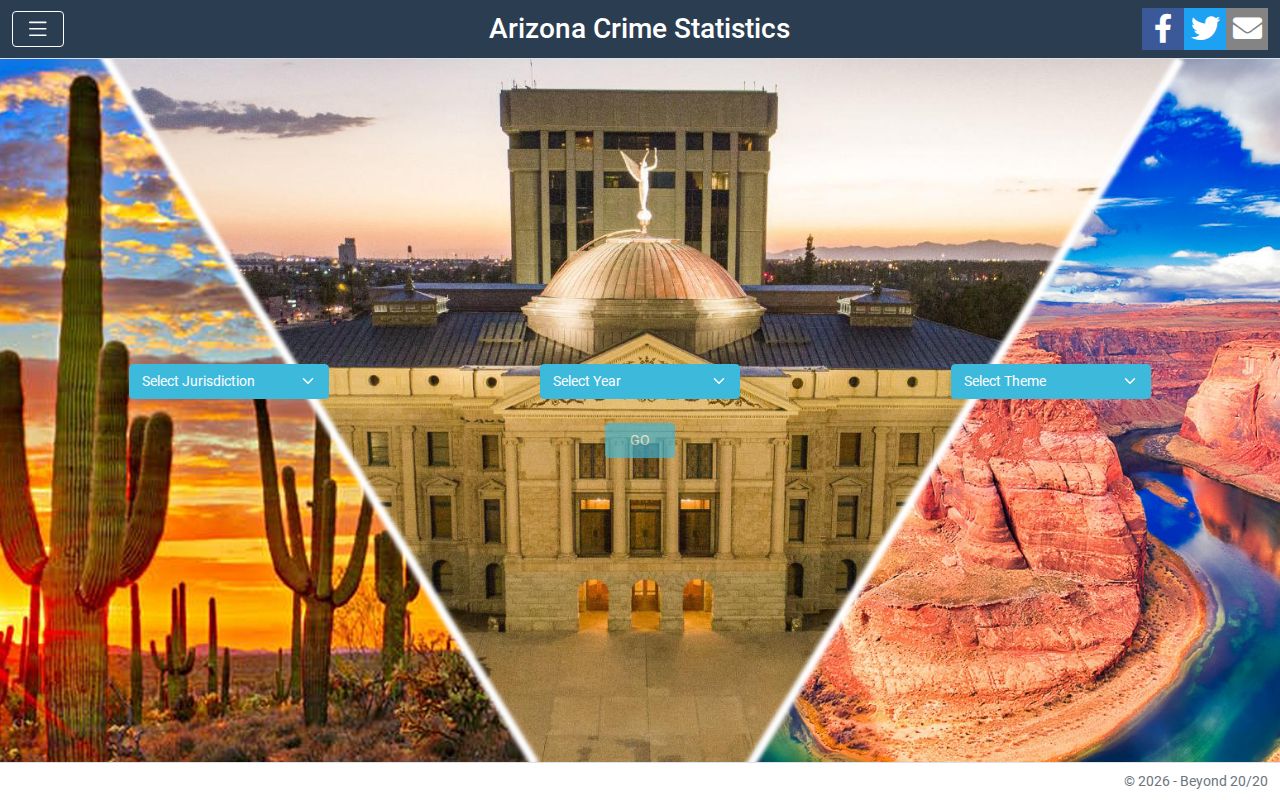
The Arizona DPS Crime Statistics portal offers jurisdiction filters and statewide context, but its totals do not identify a person's record.
For a warrant, search the public court case when possible, then call the issuing court and the Sheriff's Office. A missed date in Parker Magistrate Court, Quartzsite Magistrate Court, Justice Court, or Superior Court may create a warrant in that court's own file. Anyone trying to resolve their own warrant should ask the issuing court for current appearance, bond, and recall instructions instead of trusting an old result.
Note: Court and law-enforcement databases can update at different times, so confirm that a warrant was recalled after the required hearing or payment.
Sealed, Expunged and Restricted
Arizona uses three distinct forms of relief. A.R.S. § 13-911 allows eligible arrest, charge, conviction, and sentencing records to be sealed after statutory conditions and waiting periods. A set-aside under A.R.S. § 13-905 marks conviction relief but does not erase the record. Marijuana expungement under Proposition 207 and A.R.S. § 36-2862 applies only to qualifying marijuana offenses. The La Paz Justice Court links a marijuana petition, while other petitions begin with the court named by the governing statute.
Eligibility and filing location depend on what happened. A person convicted files in the court of conviction. A dismissed or acquitted case generally returns to the court where it was filed. If an arrest produced no charges, § 13-911 routes the petition according to the initial appearance or county of arrest. Waiting periods listed in the statute range from two years for a class 2 or 3 misdemeanor to ten years for a class 2 or 3 felony after completion of required conditions.
A sealed result may vanish from general public access while remaining available for uses the statute permits. Juvenile information, protected victim details, and active investigative material have separate restrictions. The absence of an online file should therefore be verified with the clerk, not treated as proof of sealing.
La Paz County Probation Record Routes
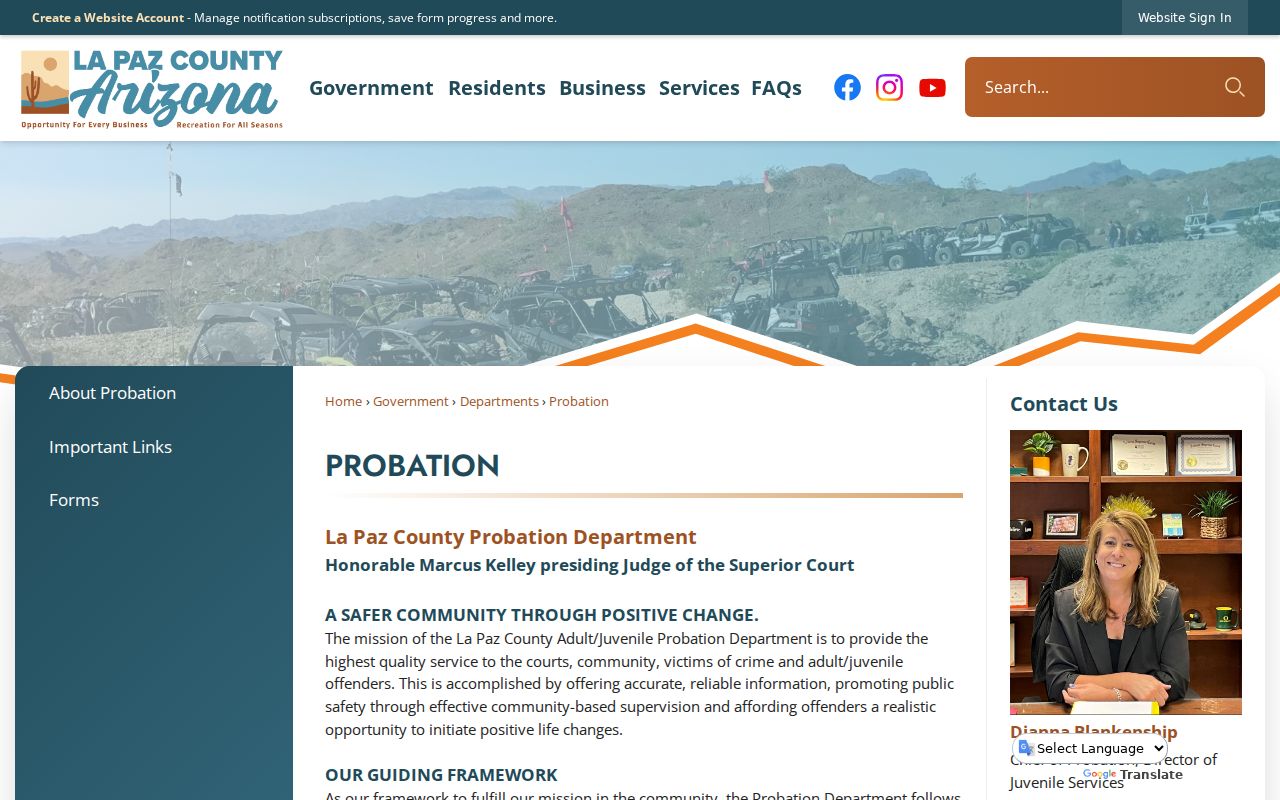
La Paz County Adult and Juvenile Probation operates under the Arizona judicial branch and the presiding Superior Court judge. The office at 1312 Kofa Avenue in Parker is open Monday through Friday from 8:00 a.m. to 5:00 p.m. Probation status is not published in a broad county lookup. Start with the sentencing court's case file for terms, later violation petitions, warrants, and hearing outcomes, then contact probation about information it can release.
The county probation page provides the department contact and hours.
State prison release and community corrections status belong to ADCRR, not county probation. That distinction matters when the court docket shows a prison sentence rather than community probation.
The La Paz County Public Defender's Office closed on December 31, 2023. Its official closure notice directs former clients to the newly assigned attorney or, if that name is unknown, to the court handling the case.
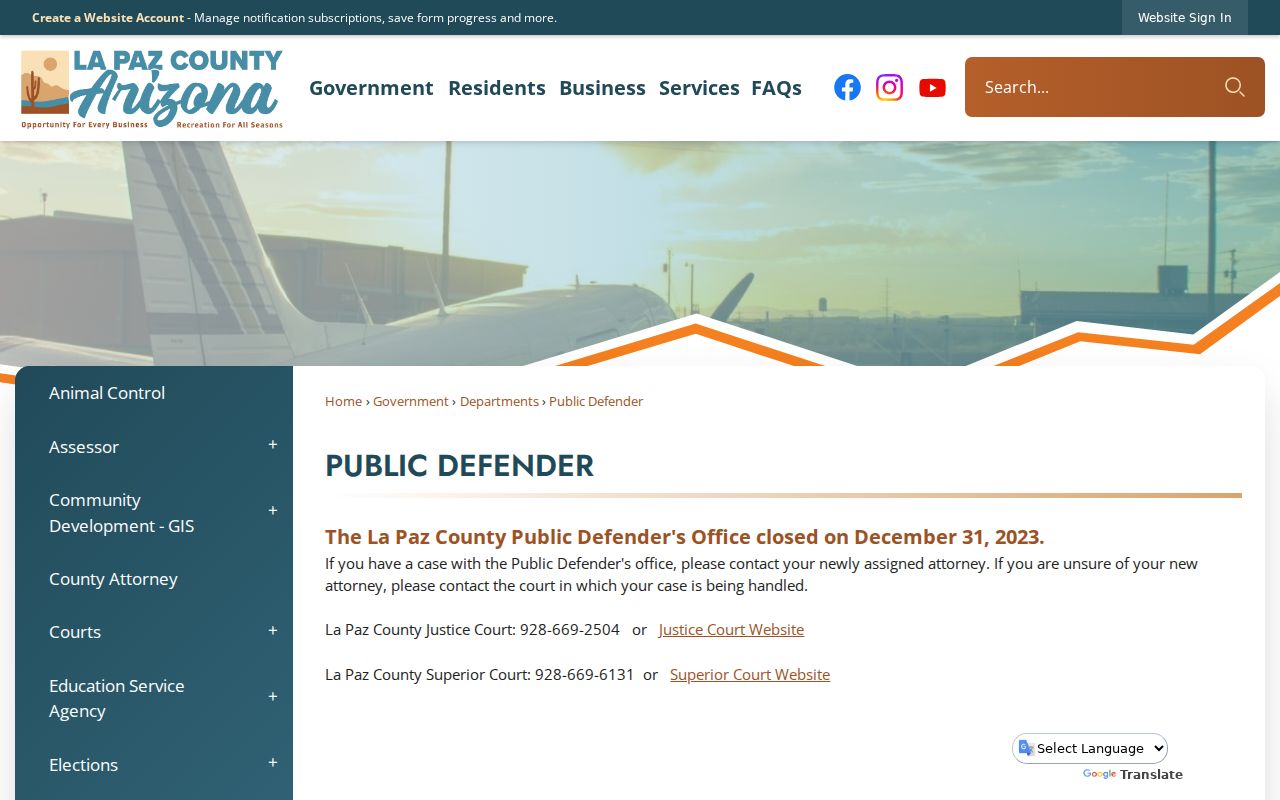
A later docket may show substitute or contract counsel, so the handling court is the reliable route for current attorney-of-record information.
Criminal Records by City in La Paz County
La Paz County has two incorporated towns. Parker Police and Quartzsite Police create their own incident records, while their magistrate courts keep municipal case files. County jail, Justice Court, and Superior Court records enter the picture when custody or charge level moves the matter beyond the town. Start with the city agency that made the record, then follow the case into the county system only when the facts support that move.
Parker Criminal History
County seat and largest town, with its police records clerk and Magistrate Court counters on Arizona Avenue.
Quartzsite Criminal History
Police records and Magistrate Court requests begin at separate North Plymouth Avenue offices.
Parker's cluster of county offices makes it the physical hub, but it does not absorb every town record. Quartzsite Police reports remain with QPD, and Quartzsite court files remain with its Magistrate Court unless the case moves to Justice or Superior Court.
La Paz County Charge Records After Investigation
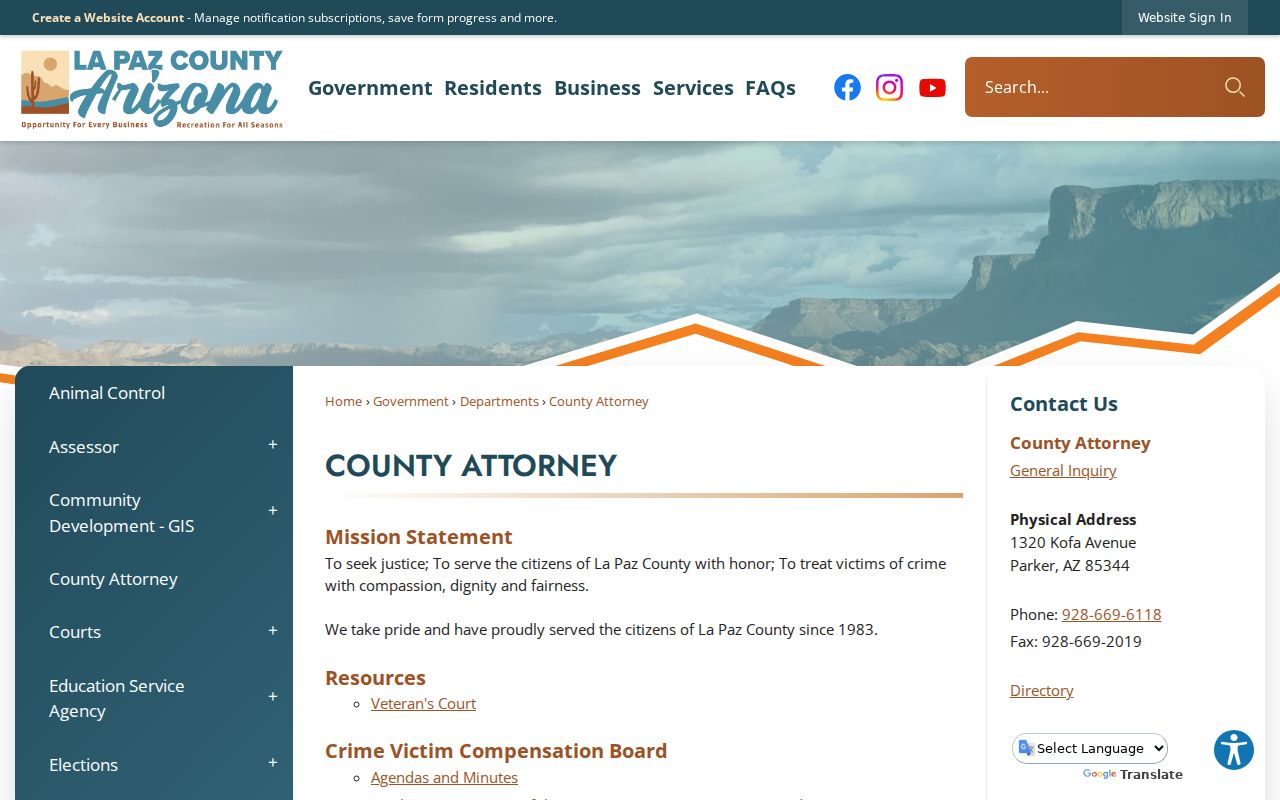
An officer's arrest charge is not the last word. A completed sheriff investigation may go to the La Paz County Attorney for a filing decision. The prosecutor may file a different charge set, decline a count, or proceed through the court with evidence not shown in the short booking entry. This is why a reader should match the report number to the later case number and read the disposition for each count.
The La Paz County Attorney page identifies the county prosecution office.
The basic flow is: Incident or Arrest → Agency Report → Prosecutor Review → Filed Complaint, Information, or Indictment → Court Disposition. If no case appears, the report may be too new, no charge may have been filed, the case may belong to another court, or access may be restricted.