
Criminal Cases in La Paz County Courts
Arizona Superior Court is La Paz County's primary felony trial court. Its clerk keeps the filed complaint, information or indictment, motions, hearing entries, judgment, and sentence. Limited-jurisdiction work is divided among La Paz County Justice Court and the Parker and Quartzsite municipal courts. Justice Court hears criminal traffic matters, including DUI, plus matters such as shoplifting, bad checks, and restraining-order violations. Municipal courts keep their own city misdemeanor, ordinance, and traffic dockets.
The court that heard the charge is therefore the first key fact. A sheriff report or jail booking can identify an event, but it is not the criminal case file. Once charges are filed, the docket records what the court did. The La Paz County Justice Court site shows its case and payment routes, court hours, and local services.
The official Justice Court page also gives a useful view of this separate court channel.
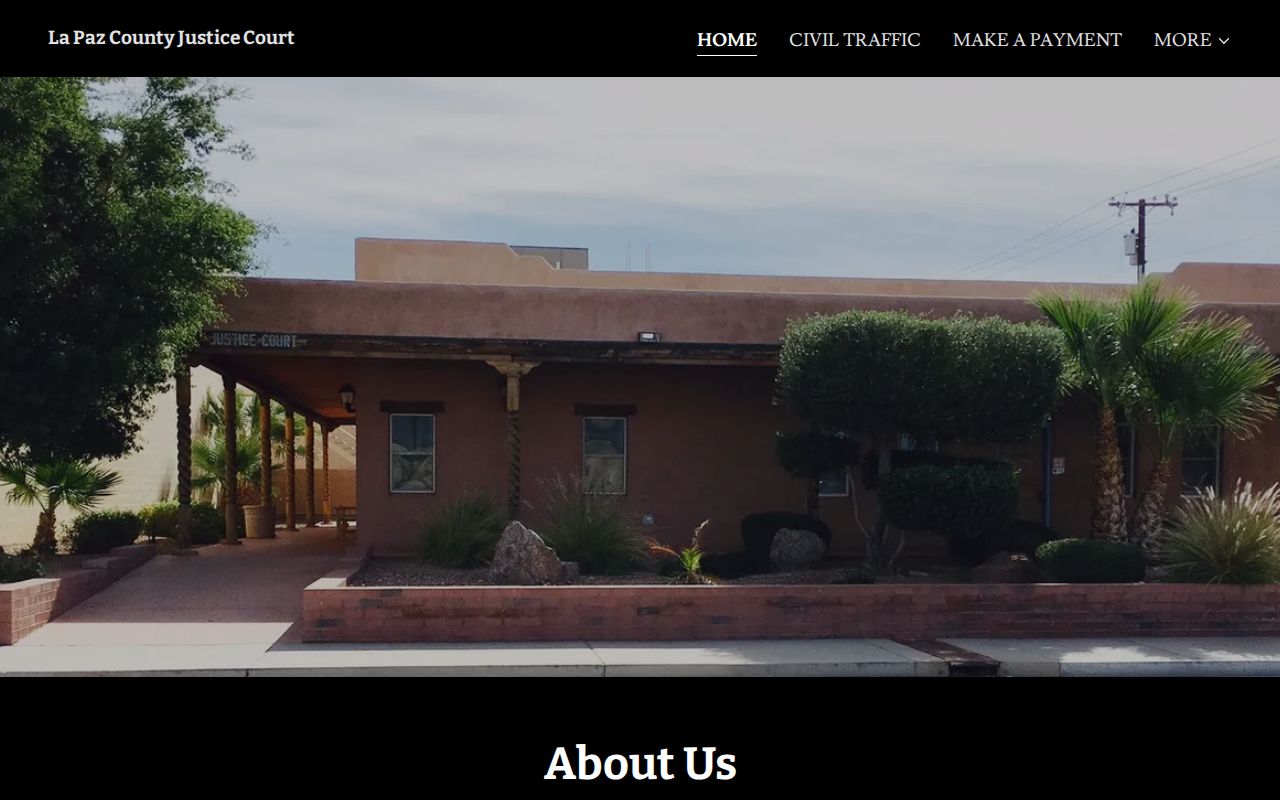
That court-specific route matters because a limited-jurisdiction case may not be held at the Superior Court clerk's counter.
La Paz County Criminal Case Levels
Charge class helps point a La Paz County case search to the right clerk. La Paz County felony cases are filed in Superior Court. Justice or municipal court usually handles a misdemeanor when jurisdiction rests with that lower court, while Superior Court may retain a misdemeanor tied to a felony case. A class 6 felony can also create confusion because Arizona law may allow later misdemeanor designation in some cases. The docket's current charge and disposition are more useful than an arrest label.
Parker is the central records hub. The La Paz Superior Court Clerk receives visitors at 1316 Kofa Ave., Suite 607, Parker, and answers case questions at (928) 669-6131. The office posts weekday hours from 8:00 a.m. to 5:00 p.m., except legal holidays. Justice Court, Parker Magistrate Court, and Quartzsite Magistrate Court remain distinct custodians for cases filed there.
The clerk's official home page displays the local counter details and its public-access warning.
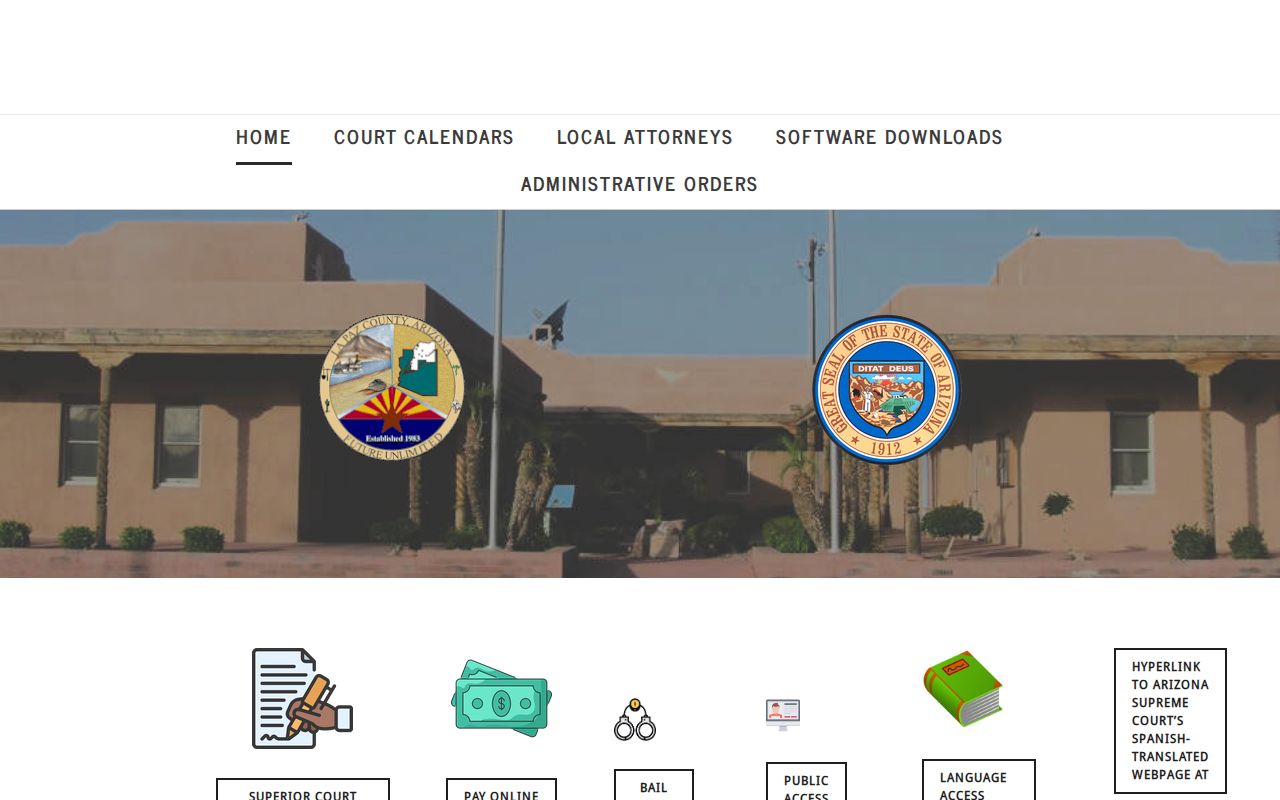
The warning is practical: no-result screens do not prove that no La Paz County court case or document exists.
How to Search Case Records
Begin with the official Arizona Public Access Case Lookup. It searches records from many Arizona courts, though court coverage and remote detail vary. An exact case number works best. A party-name search can help when the number is unknown, but common names need a court or county filter and a careful check of filing details.
- Open Arizona Public Access Case Lookup and choose the available party or case-number search.
- Enter the exact case number, or use the party's first and last name.
- Narrow the results by court, county, case type, or other available detail.
- Open the matching docket and review the court, status, events, hearings, and outcome.
- Use eAccess for Superior Court documents, or contact the filing court for missing, archived, or certified material.
The statewide case lookup interface shows why the case number and court name are useful before a reader contacts a clerk.
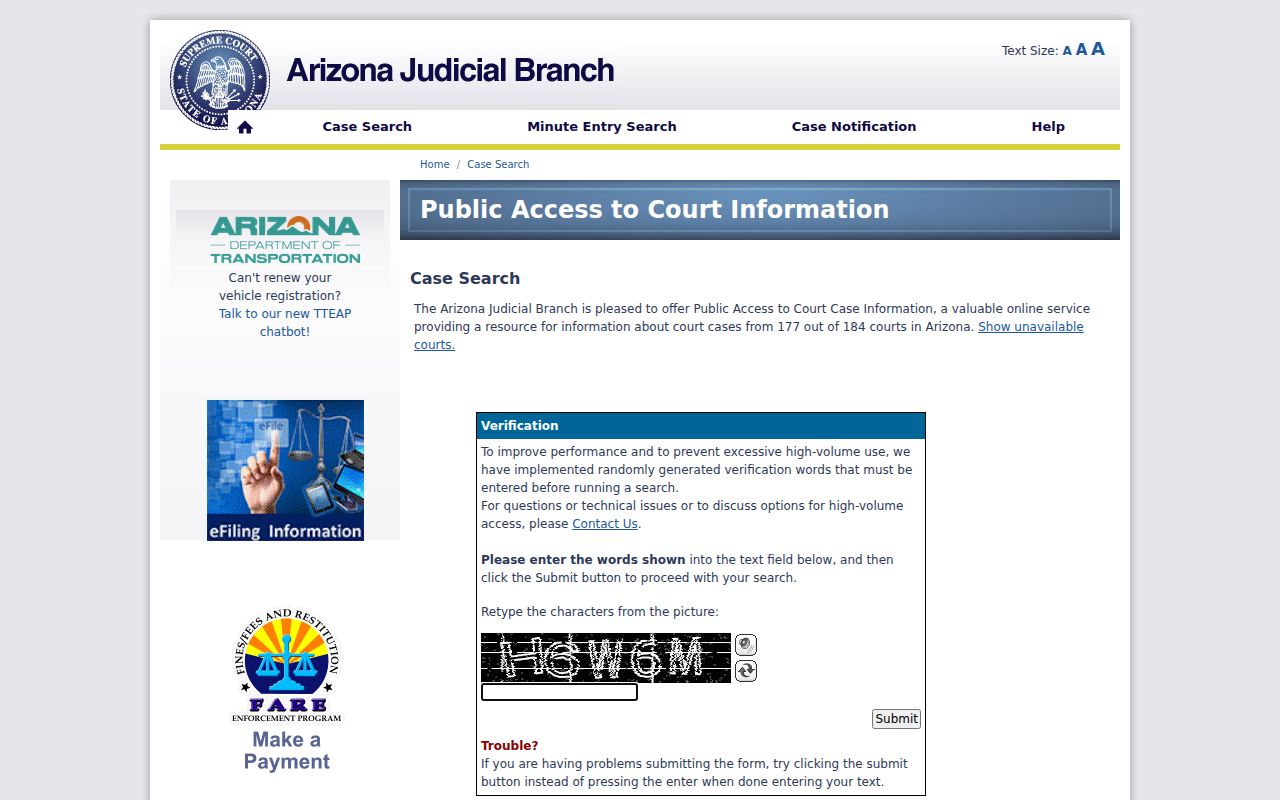
Its result is an index and case summary, not a promise that every filed document is available online.
| Field Label | Type | Required | Notes |
|---|---|---|---|
| Party name | Text | Optional by mode | Use first and last name; narrow common names. |
| Case number | Text | Optional by mode | An exact court case number is the strongest key. |
| Court or county | Filter | Optional | Available court coverage varies across Arizona. |
| Case details | Result link | Not applicable | Metadata may appear without document images. |
| eAccess account | Login | Yes for documents | Used for Superior Court criminal and civil documents. |
La Paz County Case Documents Online
The free statewide lookup and Arizona eAccess serve different jobs for La Paz County criminal cases. Public Access helps identify a case and read available summary data. Arizona eAccess is the Superior Court document channel. It requires an account for document access, and a document image may carry a transaction or payment step. That distinction prevents a common mistake: seeing docket metadata and assuming the complete La Paz County file has been opened.
The eAccess landing page is the official document route linked by the La Paz Superior Court Clerk.
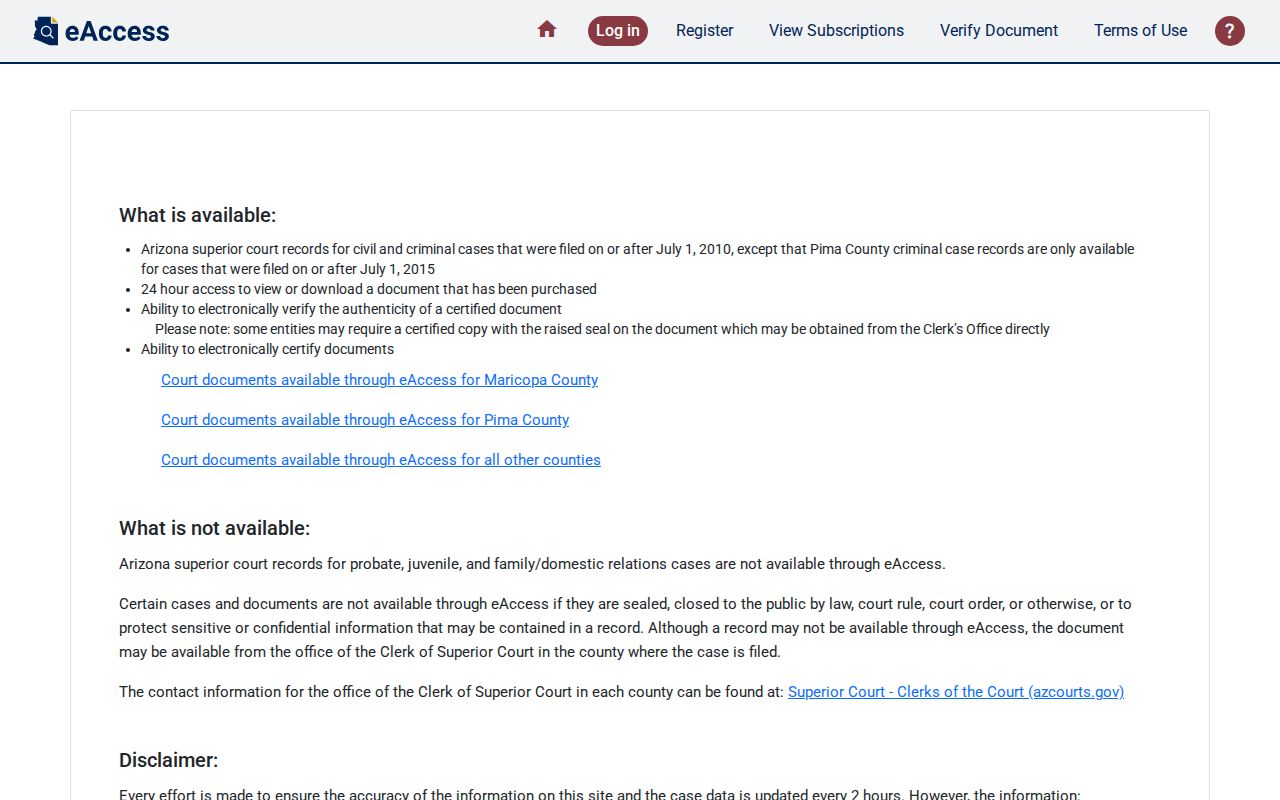
Use the docket first to identify the case, then eAccess to seek the available pleadings, orders, and other images.
Justice Court and municipal court records require a different fallback. Contact the court that owns the docket when statewide results are absent or too thin. Quartzsite's nCourt page is a payment channel, not a complete public case-file database. Older files and certified copies also belong with the filing court's clerk or physical counter. La Paz-specific copy fees were not confirmed in the official research, so ask the clerk about price and delivery before ordering.
What the Case File Shows
A La Paz County criminal case file begins after a complaint, citation, information, or indictment is filed. Its docket tracks court action rather than the full police investigation. Public fields often include the filing court, case number, case type, filing date, party roles, status, hearing dates, and event list. Charge descriptions, financial entries, warrants or capias entries, disposition, and sentence may appear when public and recorded.
| Case Number & Court | Identifies the filing court and the unique docket used for requests. |
|---|---|
| Charging Document | Shows the complaint, information, indictment, or citation that started the filed case. |
| Docket Entries | Lists filings, motions, orders, pleas, and other recorded court events. |
| Hearing Dates | Tracks scheduled and completed appearances shown on the public calendar or docket. |
| Disposition & Judgment | Records whether a charge ended in dismissal, acquittal, plea, or conviction. |
| Sentence & Conditions | May show custody, probation, fines, restitution, or other orders after judgment. |
Party names and attorneys may also be docketed. Protected addresses, victim or minor data, juvenile matters, and sealed records are not part of a normal public display. Document names may be visible even when the images require eAccess or a clerk request.
Reading La Paz County Case Terms
Short docket labels can change the meaning of a result. An arrest is not a disposition, and a filed charge is not a conviction. Read each count through its final event. Arizona case records may also show a warrant entry that concerns a missed court duty, while the rest of the file continues through later hearings.
- Arraignment
- The hearing where the filed charges are stated and a plea is entered.
- Disposition
- The recorded outcome of a charge or the case, such as dismissal, acquittal, plea, or conviction.
- Capias
- A court-issued arrest warrant, often tied to failure to appear or comply.
- Information
- A formal charging document filed by the prosecutor in many felony matters.
- Sentence
- The court's punishment and orders after a conviction.
Class labels need the same care. Felonies run from class 2 through class 6 under the cited first-time nondangerous sentencing framework, while misdemeanors run from class 1 through class 3. The charge class helps identify the court and possible range, but only the judgment and sentence entries show what happened in one La Paz County case.
Stages of a Criminal Case
The clerk's file grows as the case moves. A prosecutor may file a complaint or information, or a grand jury may return an indictment. The arraignment records the plea. Pretrial entries may include disclosure, motions, conferences, release terms, and hearings. A plea or trial then leads to a disposition. When there is a conviction, the court enters judgment and sentence.
Case flow: Charges Filed → Arraignment → Pretrial → Plea or Trial → Disposition → Sentencing
The La Paz Superior Court calendar page helps connect scheduled proceedings to this sequence.
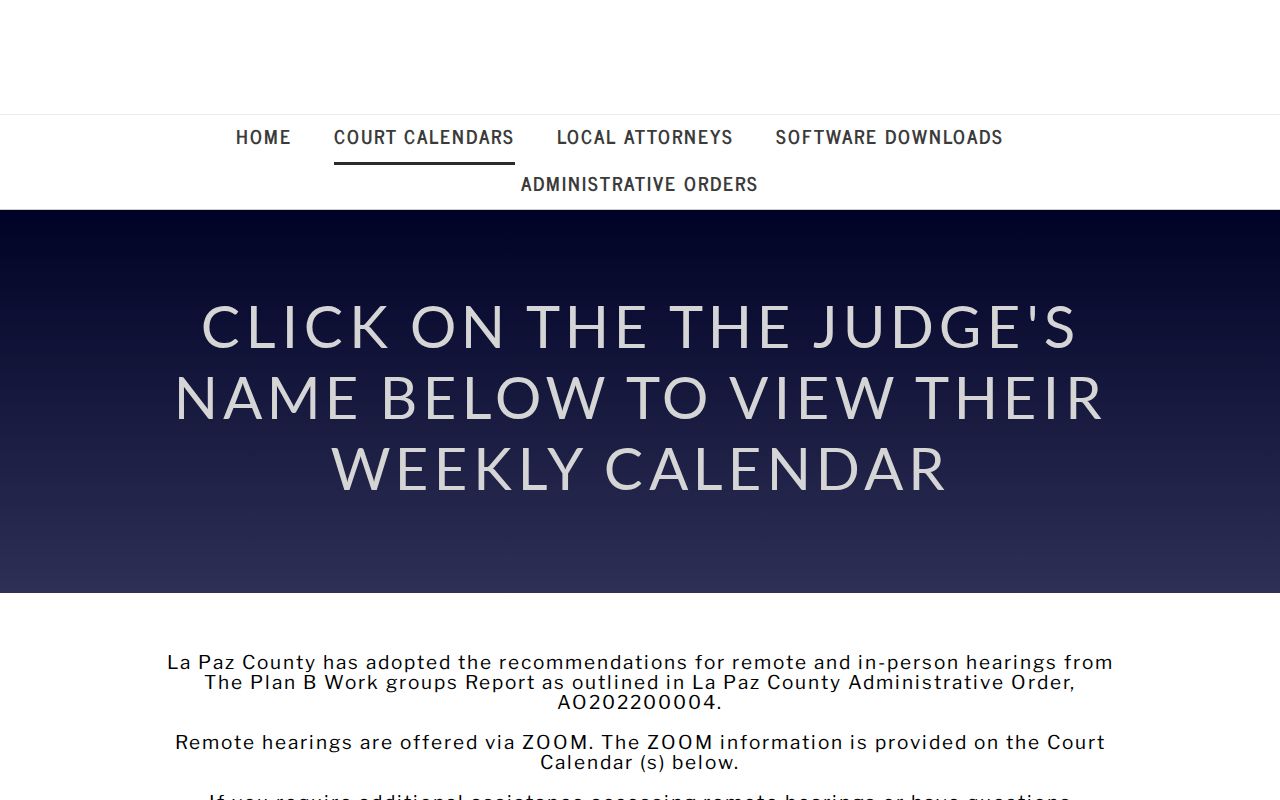
A calendar confirms when a hearing is set, while the docket later records what occurred and which step follows.
Missing La Paz County Case Records
A blank portal result can mean several things. The court may not participate fully in statewide access, a document may not be remotely available, the search details may not match, or the matter may be sealed or otherwise restricted. Start by checking spelling, case number, court, and filing year. Then call the court that likely owns the case. For Superior Court, provide the clerk with the party name, exact case number if known, and an approximate filing year.
The county's public-record request directory routes requests to the Superior Court Clerk, Justice Court, County Attorney, and other departments. Court-file access follows Arizona court rules, while agency records use their own custodians. If the missing item is a police report rather than a pleading or order, request it from the agency that created it. A court clerk cannot supply the sheriff's full incident file.
Note: A missing online entry is a prompt to verify with the filing court, not proof that the case never existed.
Access & Restrictions
Arizona Supreme Court Rule 123 generally opens court records unless law or rule closes them. Online access can still be narrower than counter access. Sealed cases, juvenile matters, protected victim or minor information, private addresses, and certain documents will not appear in a normal public view. Under A.R.S. § 13-911, eligible arrest, conviction, and sentencing records may be sealed after the court grants a petition.
La Paz County readers can inspect available case metadata through Public Access, seek Superior Court documents through eAccess, call the clerk, visit the filing court's counter, or ask that court about archived and certified copies. Direct contact is essential for Justice Court and municipal matters that lack a full public database. The statewide Arizona DPS repository is different: it does not offer private citizens a general public name search for state rap sheets. Someone reviewing their own state record must use the DPS record-review channel.
Remote La Paz County Case Hearings
Case documents and court proceedings are separate forms of access. The Superior Court public-proceedings page posts instructions for remote public audio and tells listeners to find the hearing on the court calendar. This can help a reader follow a scheduled open hearing without treating the audio connection as a record copy or docket search.
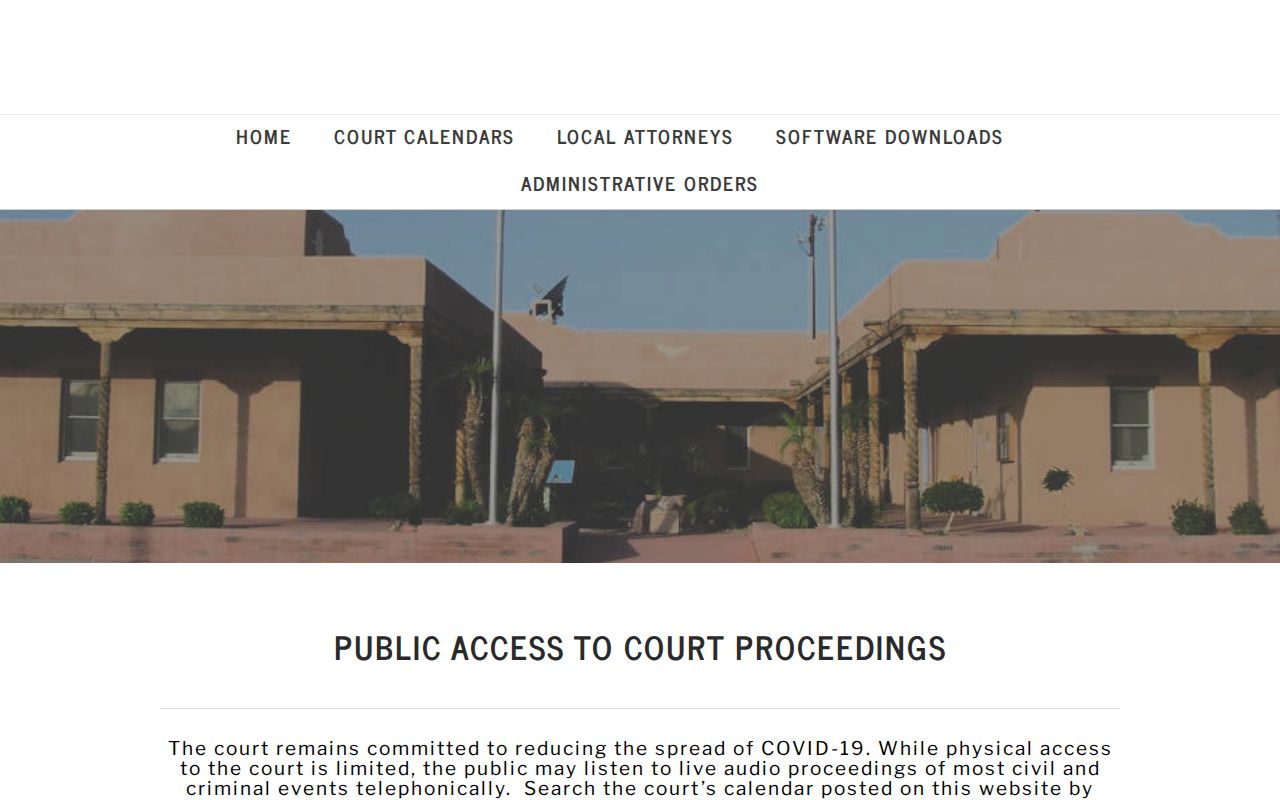
The instructions add a live-access path, but the clerk's docket remains the lasting record of filings, rulings, disposition, and sentence.
Check the calendar near the hearing date because schedules can change. Remote access applies to proceedings the court makes public, not sealed or closed hearings. Readers who need proof of an outcome should request the judgment, minute entry, or certified record from the clerk instead of relying on a calendar or audio session.